Miami parents know the heat. What they may not realize is that their child faces it differently than an adult does - and that a little scheduling knowledge changes the risk picture considerably.
Why Miami's Summer Heat Is Different
July in Miami is hot and wet at the same time, which matters more than temperature alone. Morning humidity regularly climbs above 80 percent, and by mid-afternoon the heat index can reach or exceed 100 degrees on the hottest days. On a still, sunny practice field, conditions are worse than the raw temperature suggests.
US Soccer's official heat guidelines, developed with the Korey Stringer Institute at the University of Connecticut, are built around Wet Bulb Globe Temperature (WBGT) rather than air temperature alone. WBGT accounts for humidity, wind, and solar radiation. On a typical Miami July afternoon, WBGT can run several degrees above what your phone's weather app shows - meaning a session that looks manageable on paper may already sit in a higher-risk category. Current thresholds and mandatory break intervals are published at ussoccer.com.

Children Are Not Small Adults in the Heat
Young players manage heat differently than adults - and the difference matters on a Miami practice field. Children produce more metabolic heat relative to their body mass than adults, and their sweating mechanism is less sensitive to thermal stimuli than an adult's, so they rely more heavily on dry-heat dissipation aided by a higher surface-area-to-mass ratio. Current research indicates children are not necessarily inferior thermoregulators under most ambient conditions - they use a different strategy, not a worse one. In practice, that means a child may not show the same early signs of heat strain that an adult would, making structured monitoring and scheduled rest more important than waiting for a player to ask to stop.
Thirst is a poor early-warning signal, especially for children. By the time a child feels thirsty, meaningful fluid loss has already occurred. Even a small drop in body weight from sweat measurably hurts sprint speed and decision-making on the ball. Young players should drink small amounts at regular intervals throughout any session - not wait until they ask for water. US Soccer's hydration guidelines list the recommended volumes by age group.
The First Week of Summer Training Is the Riskiest
Full heat acclimatization takes 10 to 14 days of progressive exposure. The first three days of a new summer block are statistically when heat illness in youth athletes is most likely - especially after travel or a break in a cooler environment. A player who spent two weeks visiting family up north is not acclimated to Miami's August conditions regardless of fitness level. Good coaches ease intensity and duration in the opening days of each summer block, and parents can help by flagging recent travel to staff before the first session back.
Scheduling Around Miami's Two Daily Threats
Miami's summer afternoons bring two distinct problems: peak heat and daily thunderstorms. July typically delivers several inches of rain, most of it in concentrated afternoon bursts. US Soccer's lightning protocol requires clearing the field as soon as lightning is close - and holding play for a set period after the last thunder before anyone returns. The current protocol is at ussoccer.com. A session that starts at 4 PM runs directly into both windows.
The practical answer is training before 9 AM or after 6 PM in July and August. When heat or lightning make outdoor work impractical, futsal - five-a-side indoor soccer - gives players a development-dense alternative. Players accumulate far more ball touches per session than in a standard outdoor format, so development does not stall when the weather does.
One Gear Change Worth Making
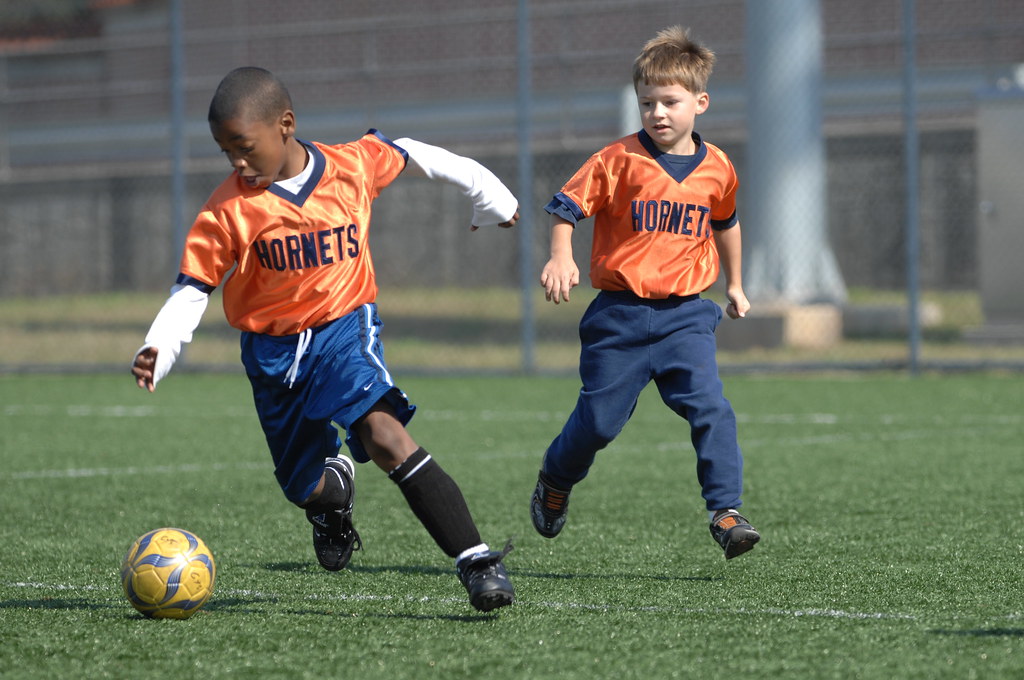
Dark jerseys absorb significantly more solar radiation than light ones. Switching to a lighter training shirt on hot days lowers the heat load with no extra cost or effort. Paired with consistent water habits and a schedule built around Miami's afternoon risk window, it is the kind of practical adjustment that adds up across a long summer.