If your child plays club soccer and someone suggests they try futsal, your first question is probably "why would we add another sport?" The second is usually "what even is futsal?" Those are the right questions. This is not an argument to switch sports. It is a case - built on how the world's best players were actually developed - for treating futsal the way elite national programs have treated it for decades: as a training tool that makes better field players, not a rival to 11-a-side soccer.
What Futsal Actually Is - and What It Isn't
Futsal is not indoor soccer. That distinction matters, and it confuses a lot of families. Indoor soccer in Miami usually means a smaller version of the outdoor game played on artificial turf inside a warehouse, with walls in play. Futsal is a completely different game with its own FIFA ruleset, its own purpose-built ball, and its own court dimensions. If the ball goes out in futsal, it goes out - just like on the outdoor field. There are no walls to bounce off of.
The official futsal court is a flat, hard surface - typically sealed concrete or hardwood - measuring 40 meters by 20 meters, roughly one-eighth the area of a full 11-a-side pitch. The game is 5v5 including the goalkeeper. Substitutions are unlimited and made on the fly, like hockey, with no stoppage - which means players cycle through high-intensity sequences back to back rather than getting natural recovery time during throw-ins and goal kicks. That combination of compressed space and continuous play is what makes futsal a fundamentally different training environment than anything else on an outdoor pitch or a turf court.

The Ball That Changes Everything
The single most important feature of futsal - the thing that separates it from every other small-sided format - is the ball. Everything else about its developmental value flows from this one engineering decision.
A regulation outdoor soccer ball has a circumference of 68 to 70 centimeters. The official futsal ball is 62 to 64 centimeters - about 10 percent smaller in diameter. More importantly, the futsal ball is built to have a drastically reduced bounce. Drop a regular soccer ball from 2 meters and it bounces back approximately 120 to 165 centimeters, per FIFA quality testing standards. Drop a futsal ball from the same height and it returns only 50 to 65 centimeters - roughly one-third as high.
What this means in practice: the ball stays on the ground. In outdoor soccer, a sloppy first touch can be rescued - the ball bounces high enough that a player can recover by cushioning it with the thigh or chest. In futsal, that rescue does not exist. A poor first touch means the ball is gone, taken by a defender pressing in a space with nowhere to hide. Players learn to receive precisely with their feet, under pressure, at full speed - or they lose possession every time. That one constraint, built into the ball itself, is why futsal players arrive in 11-a-side games with a first touch that looks different from their peers.
Why the World's Best Players Grew Up Playing It
The connection between futsal and elite field soccer is not a theory. It is a documented biography for some of the most technically gifted players of the last thirty years. Cristiano Ronaldo has said: "During my childhood in Portugal, all we played was futsal. The small playing area helped me improve my close control... If it wasn't for futsal, I wouldn't be the player I am today." Neymar was equally direct: "It has developed my technique, quick thinking and short moves. Futsal is fundamental to a footballer's life." Xavi offered the sharpest analysis: "In futsal you see whether a player is really talented. In normal football you don't necessarily identify talent as easily because it's so much more physical. But with futsal, you notice the small details in quality, class and tactical understanding."
Then there is Brazil. Brazil is the only nation in history to have won five FIFA Football World Cups and six FIFA Futsal World Cups. Development experts consistently link those parallel records to the cultural grip futsal has had on Brazilian youth sport for generations - street courts, school programs, neighborhood pickup, all using the same low-bounce ball on the same compressed surface. The technical identity that defines Brazilian soccer does not come from natural talent alone. It comes from the environment those players trained in from an early age.

The Touch-Count Advantage: What the Research Shows
The English FA, citing player development research, found that in a futsal game, each player receives the ball six times more often than in an equivalent period of 11-a-side outdoor soccer. Run the math on what that means for a young player. If a midfielder gets 20 meaningful touches in a competitive outdoor match, a futsal session of the same length gives that player closer to 120. Across a week, a month, a season, the volume of repetitions compounds dramatically.
Skill acquisition in young athletes is driven by quality repetitions under pressure over time. In 11-a-side soccer, most touches happen in open space with a few seconds to think. In futsal, on a court one-eighth the size, the defender is closing before the ball arrives. There is no time to deliberate - only time to execute. That condition is exactly what coaches mean when they talk about developing quick feet and fast decisions. Futsal does not drill those skills in isolation. It requires them in real game situations, continuously, from the first minute to the last.
Skills That Transfer Directly to the Field
The transfer from futsal to 11-a-side is not abstract. Specific technical and tactical habits built in futsal show up visibly in outdoor play.
- First touch under pressure. The low-bounce ball and compressed court make a clean first touch mandatory. Players who have logged real futsal time receive passes at pace without letting the ball squirt away - because they have done it hundreds of times in a tighter, harder environment.
- Quick combination passing. Futsal is built on wall passes, third-man runs, and fast give-and-goes in small triangles. The outdoor version - slipping a through ball into the channel, playing quickly out of a press - uses the same patterns at a larger scale. Players recognize them and execute them faster.
- 1v1 defending in tight space. Every futsal defender has to stop the ball in an area that gives the attacker almost no room to run. Players learn to cut off angles, not just chase. That skill transfers directly when an outside back has to hold up a winger near the touchline.
- Scanning before receiving. With five players on a court that small, a player who does not look before the ball arrives will instantly lose it. Futsal trains scanning as a survival habit - outdoor coaches spend entire sessions trying to teach that same head movement before receiving.
- Playing away from pressure. Because futsal defenders close so fast, receiving and immediately playing away from pressure becomes instinctive. In outdoor games, this shows up as composure in congested midfield situations that used to produce giveaways.
Youth organizations generally recommend that players under age 10 rotate through multiple positions rather than specializing, and futsal accelerates this by design. Every outfield player defends, distributes, and attacks in every single possession. There is no position that exempts a player from any phase of the game.
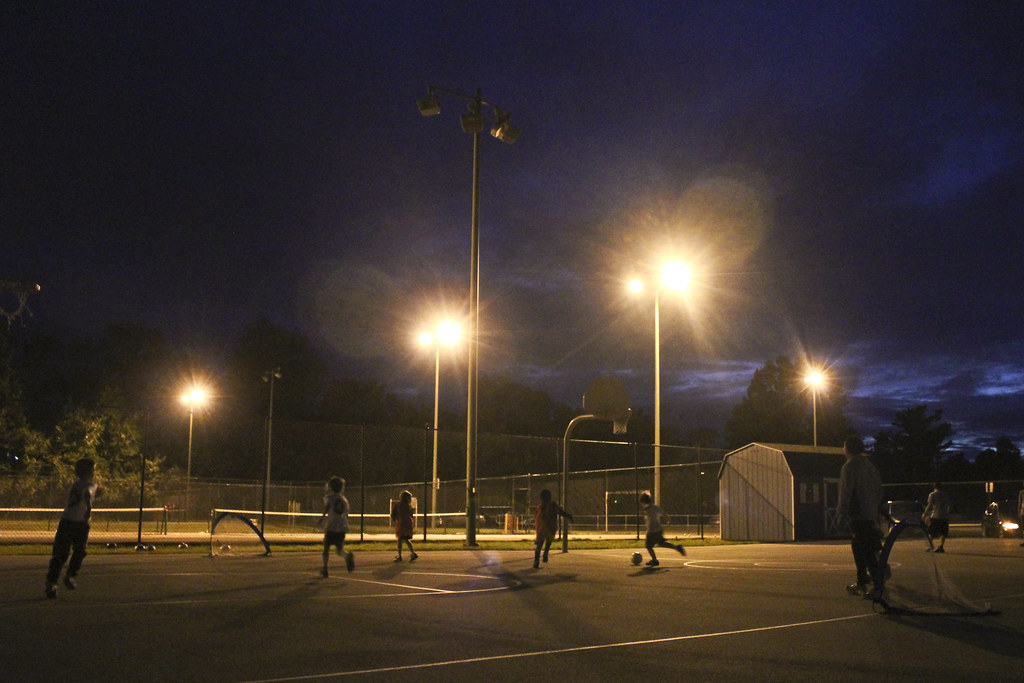
Miami's Heat Makes Futsal Especially Smart
In most of the country, the argument for adding futsal to a club soccer schedule is purely developmental. In Miami, there is an additional reason that is simply practical: the summer. Miami's summer temperatures from June through September consistently push into the upper 80s and frequently into the 90s Fahrenheit, and high humidity means the heat index - how hot it actually feels - can reach 100 degrees or higher on peak summer days. That is not just uncomfortable for youth athletes - it is a genuine health risk. Most youth soccer organizations respond by scaling back outdoor training during those months, leaving committed club players with a long stretch where quality field time shrinks sharply.
An air-conditioned futsal facility solves that problem directly. A player can complete a full hour of high-intensity technical work in a controlled environment - no heat index to manage, no sessions cut short by lightning, no water breaks every ten minutes because someone is showing early signs of heat exhaustion. For families trying to keep a child sharp from June through August without overloading the schedule, a weekly futsal session during the outdoor gap fills it with exactly the kind of technical work that pays off when fall field seasons begin.
Where to Play Futsal in Miami-Dade Right Now
Greater Miami has a stronger futsal infrastructure than most families realize. The programs below cover a range of neighborhoods, age ranges, and commitment levels. Check each program's current website for registration details, schedules, and fees - those change seasonally.
- Oasis Futsal Academy (South Miami) - A dedicated air-conditioned hard-court facility focused on futsal development, offering structured youth academies, small-group technical sessions, and summer camps. A good fit for players who want focused individual improvement alongside group training.
- Miami Sports Box (Doral) - A 20,000-square-foot air-conditioned facility offering both turf soccer and hard-court futsal, open year-round. Its scale and location in the western part of the county make it a flexible option for both pickup and organized play.
- Miami FC Academy Futsal Program (Kendall) - Runs at Indoor Sports Miami on Friday evenings, open to boys and girls born between 2013 and 2018. The structured program and academy affiliation make it a natural add-on for club soccer families already operating in that corridor.
- Gauchito Futsal / Gauchito United FC (Suniland, Doral, Pinecrest) - With three Miami-Dade locations and a national ranking of third by United Futsal, Gauchito is the most competitively credentialed futsal organization in the region. Players looking for a serious competitive futsal track - not just supplemental development work - will find the most structured pathway here.
- Fort Lauderdale United FC - Offers youth futsal on indoor courts for players aged 7 through 15. Technically in Broward, but close enough to serve North Miami-Dade families and worth including as the South Florida futsal network extends north.
How to Add Futsal Without Giving Up Club Soccer
The most important frame for this decision is "and, not or." Futsal works as a layer on top of field soccer, not a replacement. The way to think about it is the same way a serious musician thinks about scales - it is the work that makes the main performance better, not a competing performance in itself. The families who see the most benefit treat futsal as a deliberate complement to their child's club calendar rather than a reaction to it.
In practice, the integration looks different depending on the time of year:
- During the outdoor field season (fall and spring): One futsal session per week is enough to gain the technical benefits without overloading the schedule. Friday evening sessions - like those at Indoor Sports Miami in Kendall - work well because they sit far enough from weekend outdoor games to avoid fatigue buildup. The futsal session replaces a second pickup session, not anything in the club calendar.
- During the summer gap (June through August): With outdoor practice scaled back due to heat, futsal can fill the primary training slot two or three times per week. This is when the most developmental ground can be gained - high-rep work in a controlled environment, arriving naturally when outdoor schedules open up.
- As a winter competitive season: Families whose outdoor club runs fall-only often register in a structured futsal league during winter months as a competitive outlet. Players stay game-sharp, skills carry into spring tryouts, and the format is different enough that it does not feel like more of the same.
Burnout in youth soccer is real. Futsal is a different game with a different physical feel - different movements, a different surface, a different ball - which is part of why it serves as a complement rather than additional load. Most young players who try it find it genuinely fun, and that matters as much as any development metric for staying in the sport long term.
What to Watch for in Your Child's Field Game After Three Months of Futsal
The clearest early signal is the first touch. Watch how your child receives a pass under pressure. Before futsal, many youth players take a controlling touch that leaves the ball a step away from their feet. After consistent futsal work, the ball tends to land closer, tighter, more immediately under control. This is the direct product of hundreds of repetitions on a ball that punishes anything less.
A second change is the decision before receiving. Players with futsal experience tend to look up and scan before the ball arrives - not just after. You will see it as a small head movement just before the pass reaches them. That habit, built by futsal's compressed environment, means they already know where they are playing it before they have touched it.
Third, watch what happens in a congested area - a midfield scramble, a corner situation, a crowded penalty box. Futsal-trained players tend to take smaller, quicker touches in tight traffic rather than trying to create space with a big touch first. They play through the crowd because that is the only option they have had for months in a sport played entirely in tight traffic. These improvements are not dramatic transformations. They are the incremental changes Xavi was describing when he said futsal is where you notice "the small details in quality, class and tactical understanding."
Frequently Asked Questions
Will futsal teach my child bad habits that hurt their outdoor game?
No - the technical habits futsal builds are directly compatible with outdoor soccer and in many cases more demanding than what outdoor play requires. Close control, scanning habits, and ground-level first touch all transfer positively to 11-a-side. The only adjustment players sometimes need is recalibrating their passing range, since outdoor soccer operates over longer distances, but that recalibrates quickly once the field season resumes.
What age should a child start futsal?
Most programs accept players starting around age 7 or 8, and that is a reasonable point to introduce it. At younger ages the compressed format can actually be more developmentally appropriate than 11-a-side - less field to cover, more touches per player, simpler spatial demands. The programs in Miami-Dade listed above cover players from age 7 through 15, with some running junior academy formats for the youngest age groups.
How is futsal different from the indoor turf soccer my child already plays?
The differences are significant enough to treat them as separate sports. Indoor turf soccer typically uses walls as playable surfaces, a standard-sized ball, and rules close to outdoor soccer. Futsal uses a dedicated hard court, a smaller low-bounce ball with its own FIFA specifications, no walls, and 5v5 with flying substitutions. The ball difference alone changes what the game builds in a player - without the low-bounce ball, most of futsal's developmental benefits disappear.
How do I know if a Miami program is offering real futsal or just relabeled indoor soccer?
The ball is the easiest check. Pick it up and bounce it - a genuine futsal ball barely comes back off a hard floor. If the facility is using a standard soccer ball on a hard court and calling it futsal, the most important developmental element is missing. Programs affiliated with United Futsal or operating under FIFA futsal rules are the most reliable signal that you are getting the real thing.
My child already has a full club schedule. Is there a minimal way to start?
One session per week during the outdoor season is enough to start seeing the benefits - and programs like the Miami FC Academy's Friday evening format are specifically structured to slot into a club player's existing week. Summer is actually the easiest entry point: with outdoor practice limited by heat, a weekly or twice-weekly futsal session fills a gap that is already there rather than competing with anything on the calendar.