Youth development philosophies: a guide for families
When parents compare youth soccer programs, they often hear words such as philosophy, methodology and game model. They sound abstract, but they describe something practical: what coaches are trying to teach, in what order, and why. This guide explains the most common ideas so you can tell what a program is really offering and ask better questions.
What a game model is
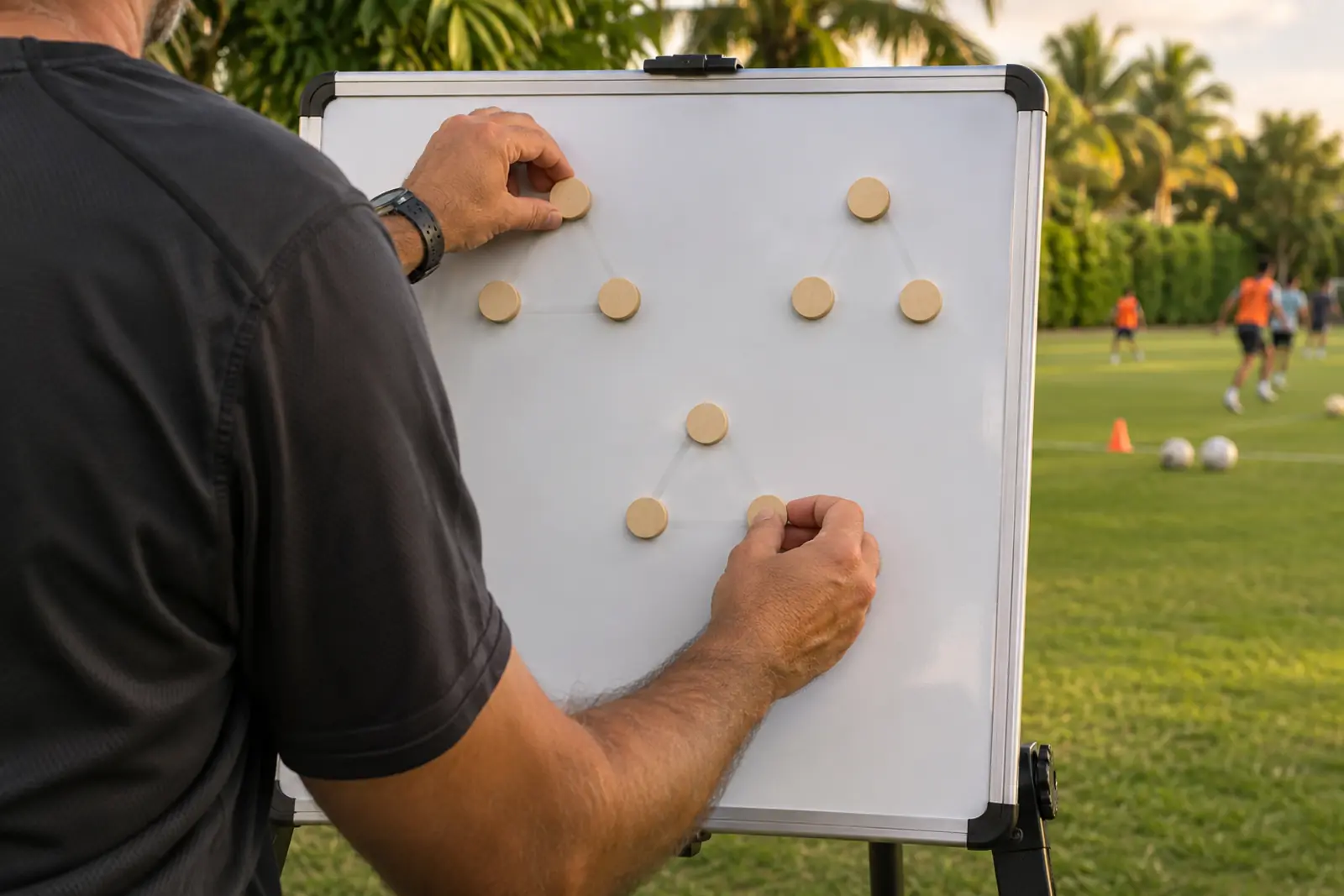
A game model is a shared picture of how a team wants to play: how it builds from the back, how it presses, how it behaves when it wins or loses the ball, and how players are expected to make decisions. When every coach in a club works from the same picture, players grow up with a consistent footballing language instead of relearning the game each season. Programs without one are not necessarily worse, but their quality depends more heavily on each individual coach.
Common philosophies you will hear about
- Possession and positional play. Teams try to keep the ball and move opponents out of shape. It rewards technique and decision-making, and it can feel slow to families who expect quick results from younger ages.
- Pressing and transition. Teams win the ball high up the pitch and attack quickly. It demands fitness and communication.
- Direct play. Teams move the ball forward early, often using long passes. It can win games at young ages, but it can limit technical learning if it is the only approach.
- Player-centered development. The focus is on each child's long-term growth, with playing time, rotation of positions and fun treated as part of the method, especially before the teenage years.
- Results-first competition. The focus is on winning and promotion between divisions. This is normal at older competitive ages but is worth examining at the youngest levels.
How philosophy changes by age
Most coaching frameworks agree that younger players need many touches on the ball, small-sided games and encouragement to try things, while tactical and physical demands increase as players mature. Our guide to development by age group goes through this in detail, and the article on specialization versus multi-sport play looks at when focusing on one sport makes sense.
Beyond tactics: character and environment
A philosophy is only real if it shapes behavior. Look for how coaches talk to players after a mistake, how they treat referees and opponents, and whether academics and rest are respected. The article on mental toughness and the sideline guide for parents cover this side of development.
Questions to ask any program
- Is there a written curriculum or game model, and do all age groups follow it?
- How are coaches qualified and supported, and how often are they observed?
- How much playing time can a player expect, and how are teams selected?
- How does the program handle player feedback, injuries and burnout?
To compare program types, see the overview of youth programs in Miami and the guide to choosing between recreational, club and academy soccer.