Youth soccer options in Miami at a glance
Miami families can choose from six broad kinds of team and training soccer, plus adaptive programs: recreational leagues, competitive club and travel teams, academies, school and high school teams, camps and training, and futsal. Recreational play is the usual starting point; the other types add selection, cost and time commitment. The names are used loosely, so the same word can mean different things at different organizations. This overview describes what each type generally involves and what to verify before committing.
Quick comparison
- Recreational: open registration, volunteer coaches, lowest cost, light schedule
- Club and travel: usually tryouts, paid coaches, several sessions a week, tournaments and travel
- Academy: a label that can mean a top development team or simply a training brand, so check what it includes
- School teams: run on the school calendar under school and state athletic association rules
- Camps, clinics, private training and futsal: supplements to team play rather than replacements for it
Recreational soccer
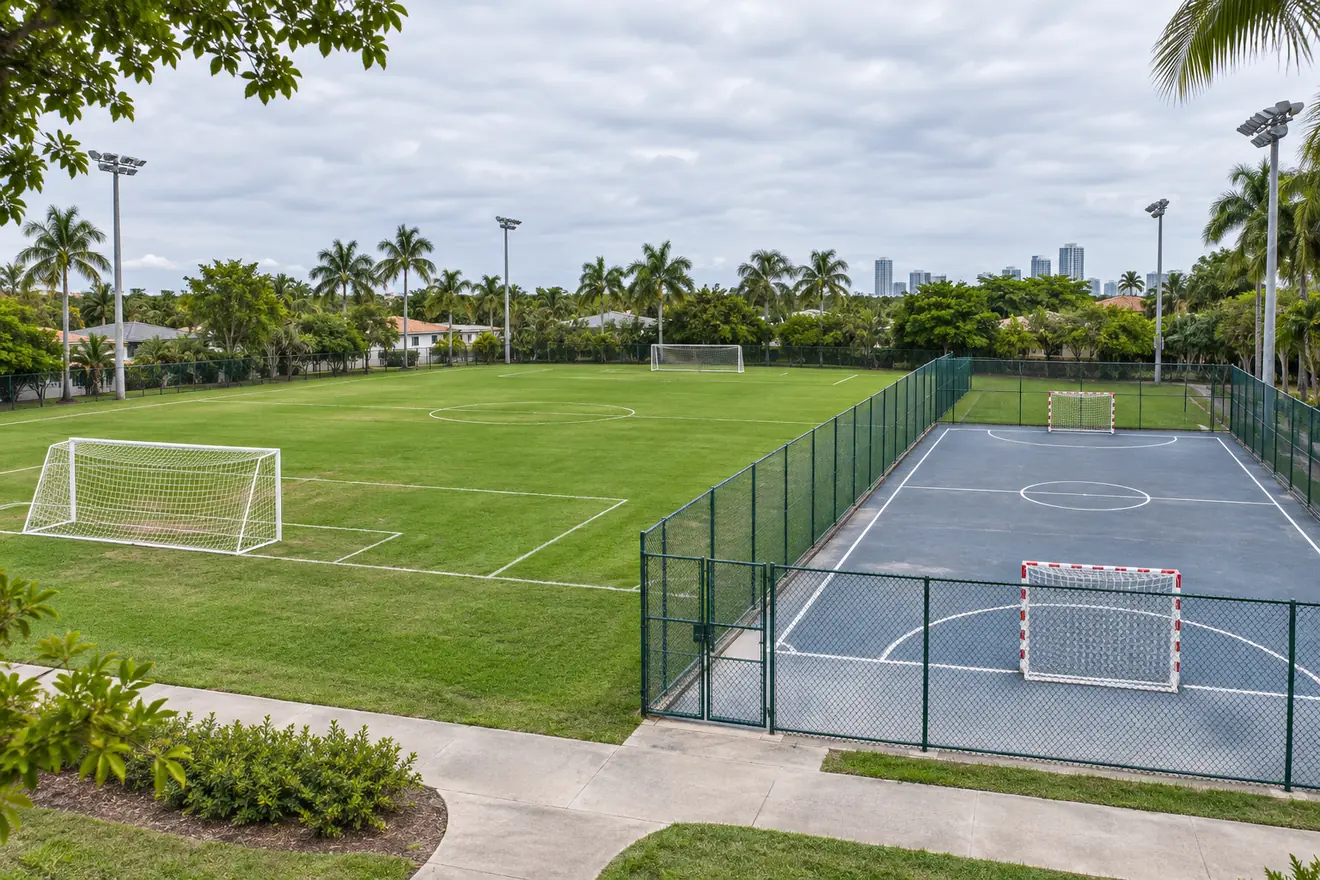
Recreational (rec) leagues are the usual entry point. They are typically run by parks departments, community organizations or volunteer-led leagues, with lower fees, volunteer coaches, a modest practice schedule and a focus on participation. Teams are often formed by neighborhood or by random assignment. It is a good fit for younger children and for any player who wants to enjoy the game without a heavy time commitment. For where games are usually played, see the guide to parks, fields and facilities in Miami.
Competitive club and travel teams
Club teams usually select players through tryouts, train two or more times a week with paid coaches and play in leagues and tournaments that may involve travel. Fees and commitments are higher. The guides to leagues and competitive pathways and travel soccer explain what to expect, and the overview of youth soccer tournaments in South Florida covers the events these teams typically enter.
Academies
The word academy is used in different ways: sometimes for a club's top development teams, sometimes for training programs for younger children, and sometimes simply as branding. Ask what the academy actually provides: number of sessions, coach qualifications, league affiliation and the pathway it offers. The guide on choosing between recreational, club and academy soccer compares them side by side and is the place to go if the decision is between those three.
School and high school soccer
School teams run on a school calendar with eligibility rules set by the school and state athletic association. See the guide to high school soccer in Miami for how it interacts with club play.
Camps, clinics and private training
- Camps and clinics: short, intensive sessions, often during school breaks
- Private and small-group training: individual technical work alongside team practice
- Goalkeeper training: specialist sessions for keepers
- Futsal: the fast indoor game that sharpens touch and decision-making
Adaptive soccer for players with disabilities
US Youth Soccer runs TOPSoccer (The Outreach Program for Soccer), a recreational program for children and adults with intellectual, emotional or physical disabilities. According to US Youth Soccer, it operates only through local clubs affiliated with US Youth Soccer, and families can find participating clubs through the club finder on the TOPSoccer page or the state association office. Costs, ages and schedules are set locally, so ask the club or state association.
How programs are usually grouped by age
Most organizations group players by birth year, with small-sided formats for younger children and full-size games for older teenagers. The exact age cutoffs and game formats are set by each league and change over time, so confirm them with the league. The guide to development by age explains what coaches generally emphasize at each stage.
What to check before you commit
- Total season cost, including uniforms, tournament fees and travel (see the cost guide)
- Training and match schedule, and how far you must drive
- Coach qualifications and background checks
- Refund and withdrawal policies, and how roster spots are decided
- Whether the club or league is affiliated with a recognized association
Prices, rosters and age groups are confirmed by each provider before every season, so always verify directly with the organization.
Frequently Asked Questions
What is the difference between recreational and competitive youth soccer?
Recreational leagues emphasize participation, with volunteer coaches, lower fees and a lighter schedule. Competitive club teams usually select players at tryouts, use paid coaches, train more often and play in leagues and tournaments that may involve travel. Costs and time commitment are higher in the competitive track.
Does a child have to try out to play youth soccer in Miami?
Not for recreational play, which is generally open to anyone who registers. Competitive club teams usually hold tryouts, and the guide to preparing for tryouts covers what players can do beforehand.
Is an academy better than a club team?
Not automatically. Academy is a flexible label, and what matters is the number of sessions, coaching qualifications, league affiliation and the pathway the program offers. Compare those details rather than the name.
Are there soccer programs for children with disabilities?
Yes. TOPSoccer, run through US Youth Soccer-affiliated clubs, is a recreational program for children and adults with intellectual, emotional or physical disabilities. Ask the local club or the state association whether it offers a TOPSoccer program.